** Warning – this blog shows bruising and X-rays from my knee replacement **
When people ask me about my knee replacement, the first thing I tell them is this: recovery happens in stages.
For me, everything seemed to move in blocks of three. Three days, three weeks, six weeks and then beyond. Looking back through my notes, those milestones really stand out.
If you’re about to have a knee replacement, or you’re supporting someone who is, I hope sharing my experience helps you understand what the recovery process can feel like.
Why I Finally Decided to Have a Knee Replacement
My knee replacement wasn’t a decision I made overnight.
I’d been dealing with pain in my right knee on and off for around eight years. Like many people, I learned to live with it. Some days were better than others, and because I could still cycle without too much discomfort, I convinced myself it wasn’t that bad.
However, over the last two winters, things started to change. I’ve always loved skiing, but the pain became so intense that I could no longer enjoy it. Even everyday activities, such as walking up and down stairs, became increasingly difficult and sore. It wasn’t just the pain itself; it was the constant awareness that my knee was limiting what I could do.
About 3 years before my operation, I had X-rays, which showed exactly what was happening. The cartilage in my right knee had completely worn away, and the joint was now effectively bone on bone. Suddenly, all those years of discomfort made sense.
Initially, I had cortisone injections, which helped for a while. They reduced the pain and allowed me to carry on with life much as normal. Unfortunately, over time, they became less effective and eventually stopped helping altogether.
At that point, I knew I had reached the stage where surgery was the best option.
My doctor recommended a surgeon with an excellent reputation, and I put my name on the waiting list. I was told the wait could be up to 18 months, so I settled in for what I expected would be a long delay. In the end, I waited around nine months.
Looking back, I’m glad I did. The surgeon’s reputation for successful outcomes was one of the reasons I felt confident going ahead, and after living with the pain for so many years, I was ready to get my life back.
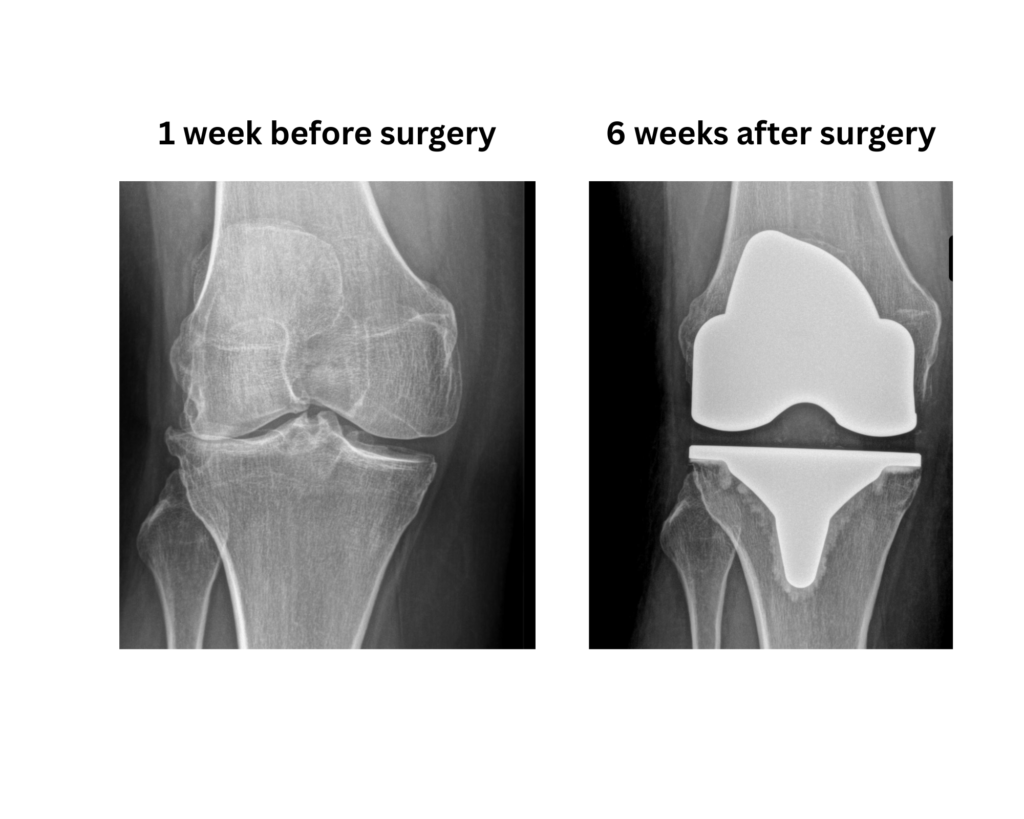
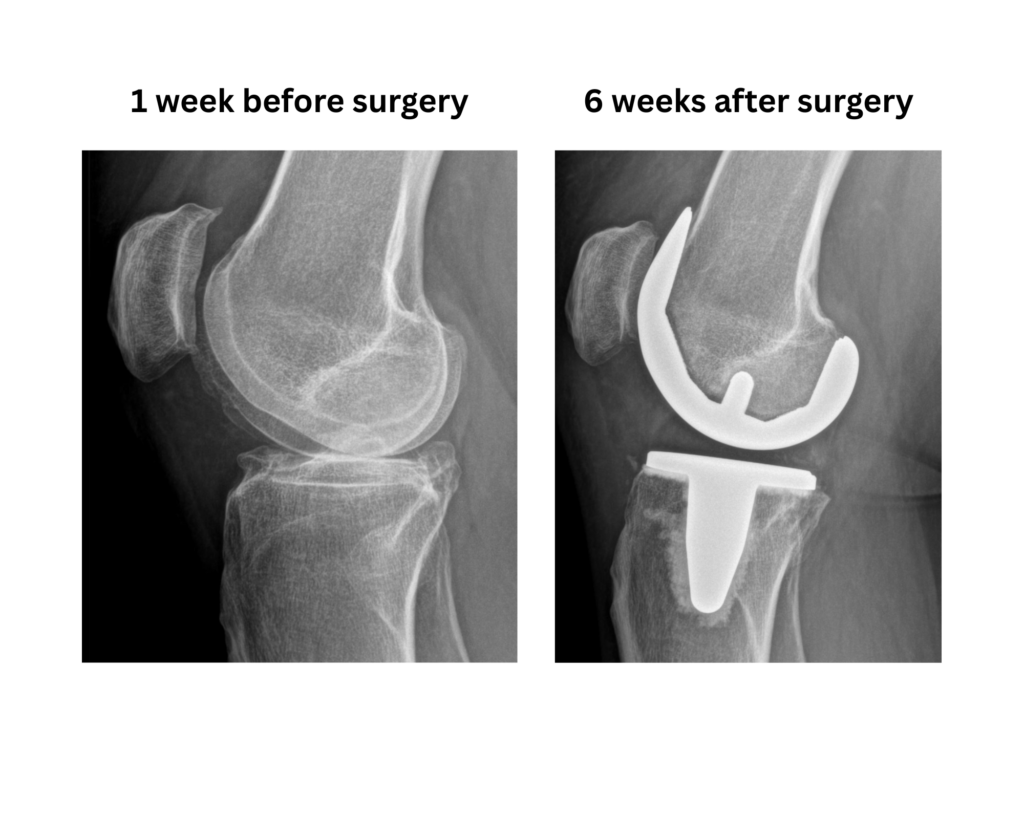
In the photos, you can see that before surgery there was no cartilage, so it was just bone on bone and was the source of all my pain. In the after-surgery photos you can marvel at the amazing piece of engineering a new knee joint is!
The First Three Days: The Toughest Part
I’m not going to sugarcoat it. The first three days were painful.
Even though you’re encouraged to get on your feet very quickly after surgery, I found those first few days incredibly challenging. I still remember waking up after the operation and feeling the intensity of the pain.
The nursing staff were excellent and made sure I had the pain relief I needed. My advice would be simple: take the medication you’re offered. The pain does improve, but those first few days are about getting through one step at a time.
By day three, I was moving around more comfortably and beginning to feel that things would eventually get better.
The Joy of a Shower
One of the highlights of the first week wasn’t walking.
It was having a shower.
After several days of feeling uncomfortable, tired and sore, standing under warm water, washing my hair and feeling clean again was amazing. It’s funny how something so simple can completely lift your mood.
For a short time, I felt almost normal again.
Learning How to Sleep Again
The next challenge was sleep.
Finding a comfortable position in bed became a nightly puzzle. I was constantly trying different positions and hoping to get an hour or two of uninterrupted sleep.
One thing I wasn’t expecting was a strange burning sensation around my knee. Whether it was nerves healing or simply my imagination working overtime, it felt very real.
Sleep was difficult because whenever I stayed in one position for too long, my knee would stiffen. If I drifted off for an hour and woke up, I knew I would have to move it and that the first few movements would be painful.
The stiffness and subsequent pain became one of the biggest frustrations during recovery.
A Week in Hospital
I spent a week in the hospital and honestly couldn’t have been looked after better.
The staff were patient, encouraging and always there when I needed help. They pushed me when I needed pushing and reassured me when I wondered if recovery was ever going to get easier.
After a week, I was ready to go home.
Or at least I thought I was.
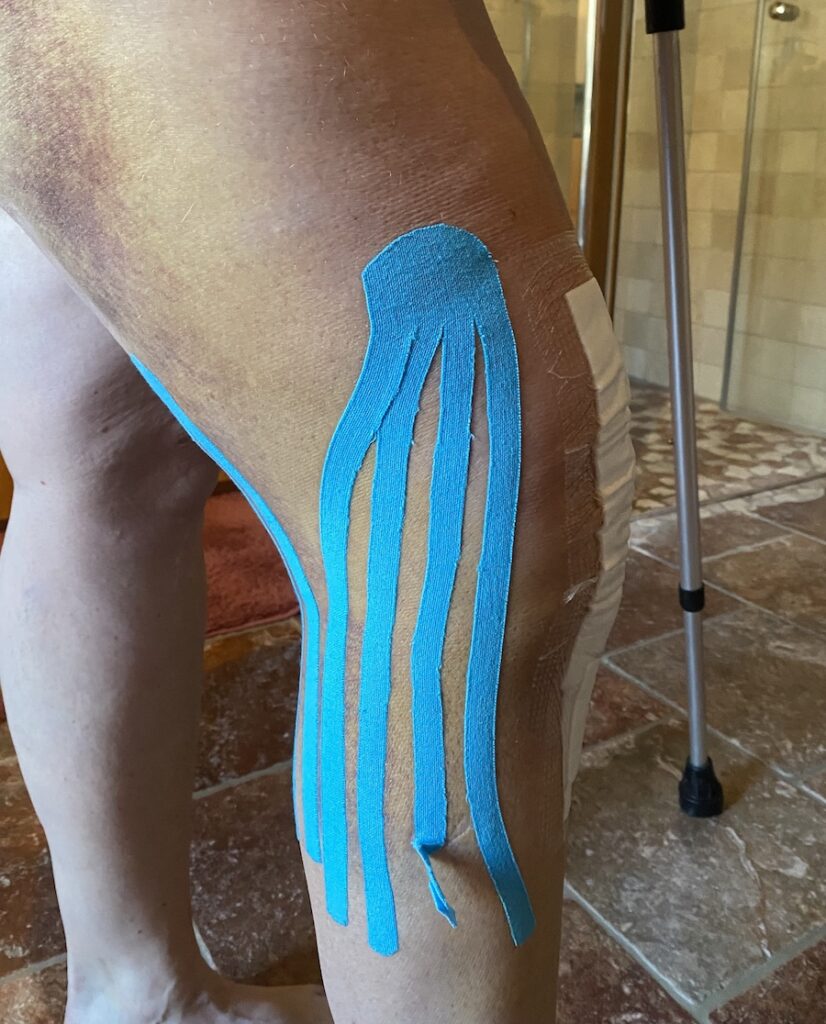
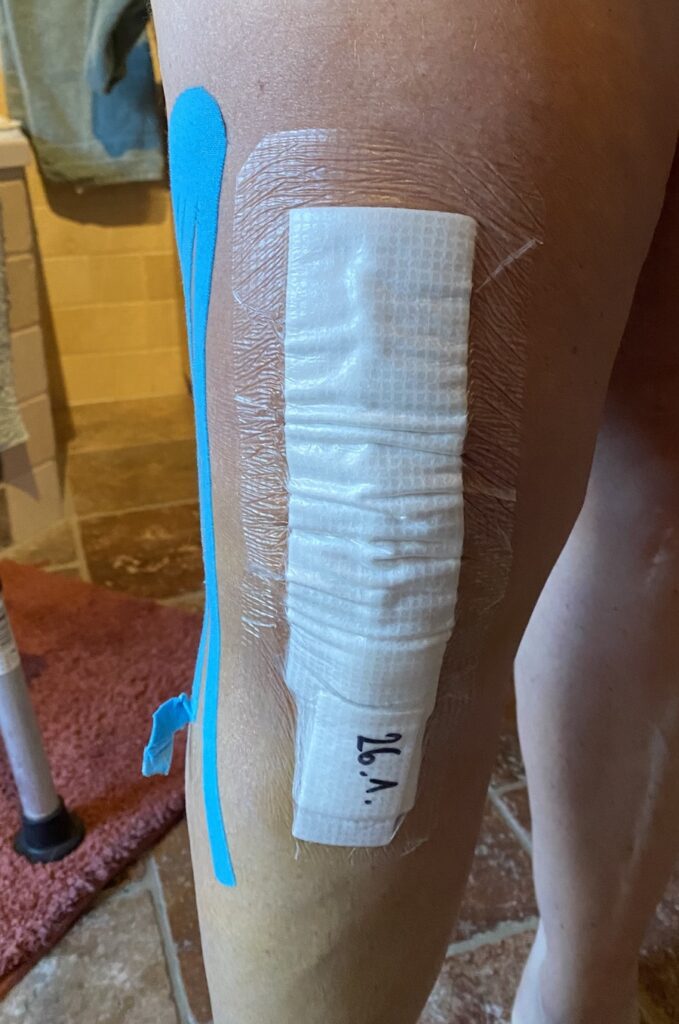
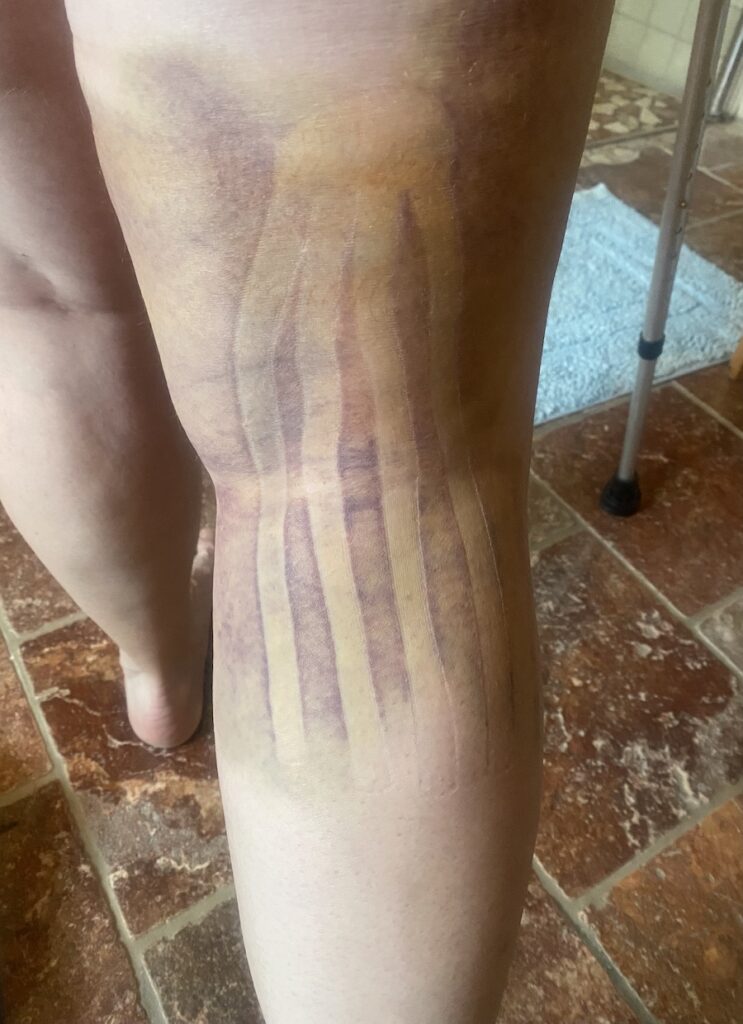
These photos are from the day after I got home. The bruising didn’t hurt, despite it being extensive; it reached most of the way up my thigh and down to mid-calf. The physio in the hospital put on the K-tape and said it would help reduce the bruising…. and it did. The incision had 28 staples to keep it closed, hence the long plaster.
Home: Where the Real Work Begins
Going home after my knee replacement was wonderful, but it was also when the real rehabilitation began.
My days quickly developed a routine.
- Physiotherapy.
- Exercises.
- Walking.
- Rest.
- Repeat.
I also paid for regular massage treatments. Recovery isn’t just about the knee itself. Your entire body has to adjust to a new way of moving.
Muscles you didn’t even know existed suddenly start complaining.
Because I was using crutches, my shoulder was also taking a lot of strain. Unfortunately, this was made worse because I had undergone shoulder surgery only three months earlier.
The crutches were probably my least favourite part of the whole process.
The Machine That Became My Friend
One piece of equipment made a huge difference.
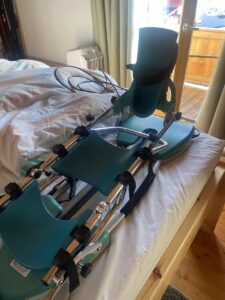
I was provided with a machine that gently bent and straightened my knee. It looked a bit like a mechanical leg, and I used it at home twice a day.
It wasn’t always comfortable, but it helped me improve both my bend and extension. Combined with my exercises, it played a big role in restoring my movement.
The First Three Weeks
After about three weeks, things started to improve.
I was becoming more confident on the crutches.
My walking was getting better.
The pain was becoming more manageable.
I still limped, but I worked hard to walk as naturally as possible. I wanted to develop a good walking pattern from the beginning.
Looking back through my notes, I can see that most days followed a similar pattern.
- Go for a walk.
- Do my exercises.
- Stretch.
- Massage the scar.
- Massage the knee.
- Try to sleep, even during the day.
- Then do it all again the next day.
The Unexpected Side Effect
One thing I wasn’t really prepared for was the effect of all the medication on my stomach.
For the first three weeks, I had regular stomach discomfort despite taking medication designed to protect it.
It wasn’t serious, but it was another reminder that recovery involves more than just the operation itself.
Fresh Air Was the Best Medicine
If there was one thing that helped me more than anything else, it was getting outside.
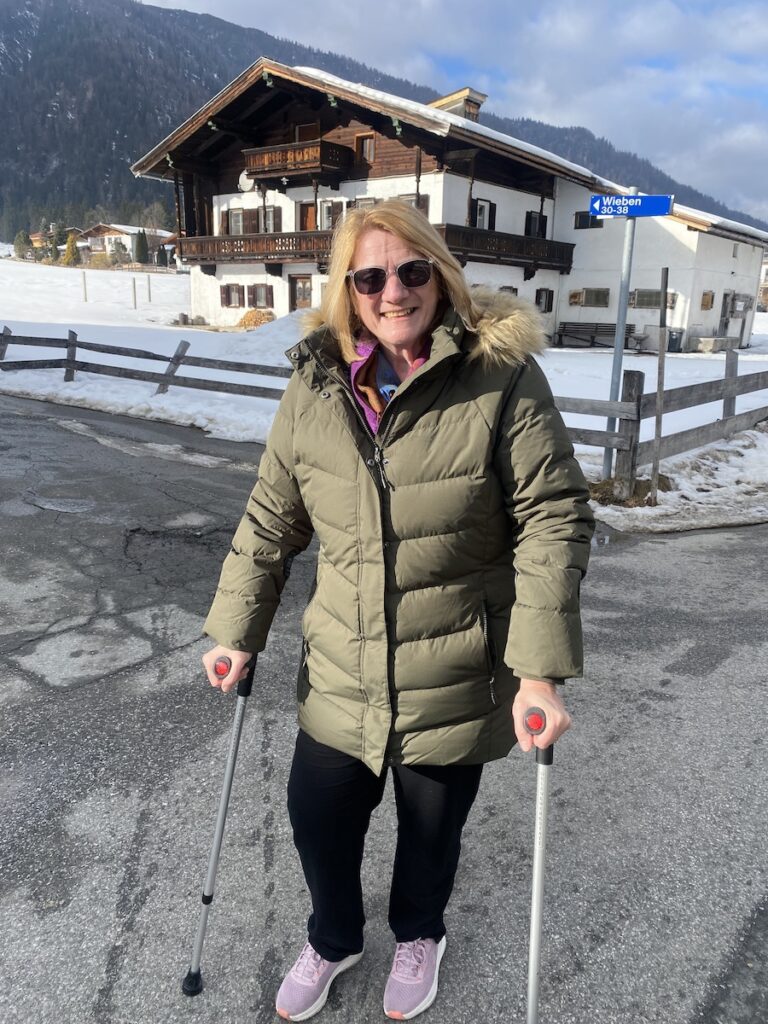
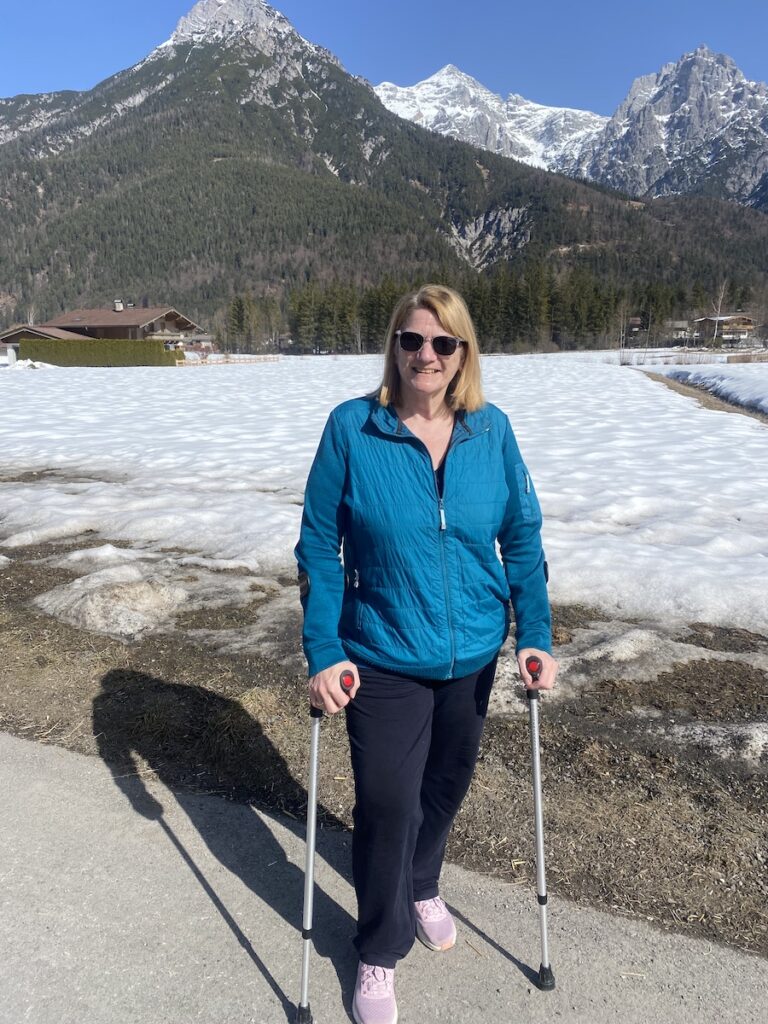
Fresh air, sunshine or snow showers in my case, and a gentle walk did wonders for both my body and my mindset.
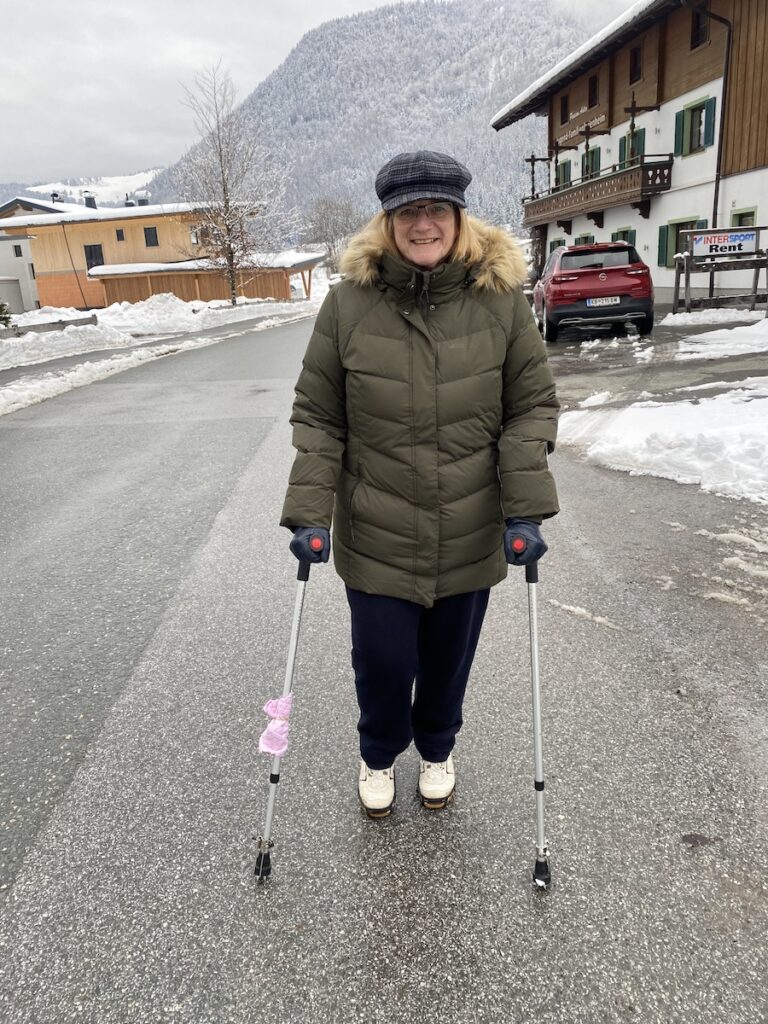
We had quite a lot of snowy days in February, so I bought chains that fit over your shoes to prevent slipping. I even bought spikes for the ends of my crutches so they wouldn’t slip away from me.
Each day I would try to increase the distance. Some days this was not possible as the pain was too much or I simply couldn’t manage the distance.
Rehabilitation is not linear; it is more like the mountains where I live – up and down!! I set myself goals, no matter how small; one of mine was to carry my own mug of tea to my chair. I felt that goals were important no matter how small. It is always good to see progress.
Some days, progress felt slow, but getting outdoors always made me feel better.
Six Weeks: A Turning Point
At six weeks, I reached an important milestone.
I could sit properly in a chair with my knee bent.
The area around the scar was still tight and a little sore, but overall, things felt manageable.
I also had my six-week check-up, and the surgeon was pleased with my progress.
Even better, I could finally stop wearing the compression stockings and say goodbye to the daily thrombosis injections.
That felt like a major victory.
I was also walking around the house without crutches, which gave me a wonderful sense of freedom.
My Shoulder Decides to Join the Party
Just as my knee was improving, my shoulder decided it wanted some attention.
Weeks of relying on crutches had left it stiff, painful and almost frozen.
Simple movements became difficult and sometimes impossible.
When I returned to see the shoulder surgeon, he outlined three possible options.
- A cortisone injection.
- Manipulation under anaesthetic.
- Or further surgery.
Thankfully, the cortisone injection worked brilliantly.
The relief was almost immediate, and within 48 hours, I could move my shoulder much more comfortably and restart the exercises my physiotherapist had prescribed.
Seven Weeks: Back on the Bike
At seven weeks, I climbed onto the indoor bike for the first time.
It wasn’t elegant.
It wasn’t fast.
But the pedals were turning.
That moment felt enormous.
For the first time since surgery, I could see a path back to the activities I loved.
Eight Weeks: Goodbye Crutches
At eight weeks, I finally stopped using crutches.
What a relief.
However, I was very conscious about walking properly. I’d seen my dad develop a side-to-side swaying gait after having both his knees replaced, and I was determined to avoid the same thing.
Every walk became an opportunity to focus on posture, balance and good movement habits.
Back to What I Love
As spring arrived, life started to feel normal again.
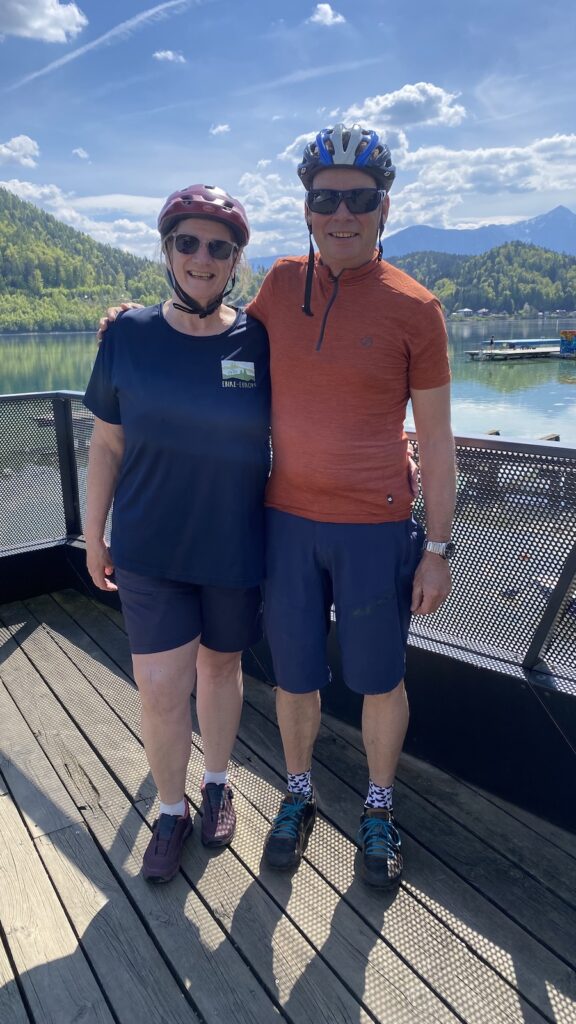
Our first cycling trip was a long weekend in southern Austria around the beautiful Klopeiner See.
The weather was warm, the scenery was stunning and being back on the bike lifted my spirits enormously.
In April, we travelled to the UK for our nephew’s wedding. I was slightly concerned about flying and possible swelling, but thankfully, everything went smoothly.
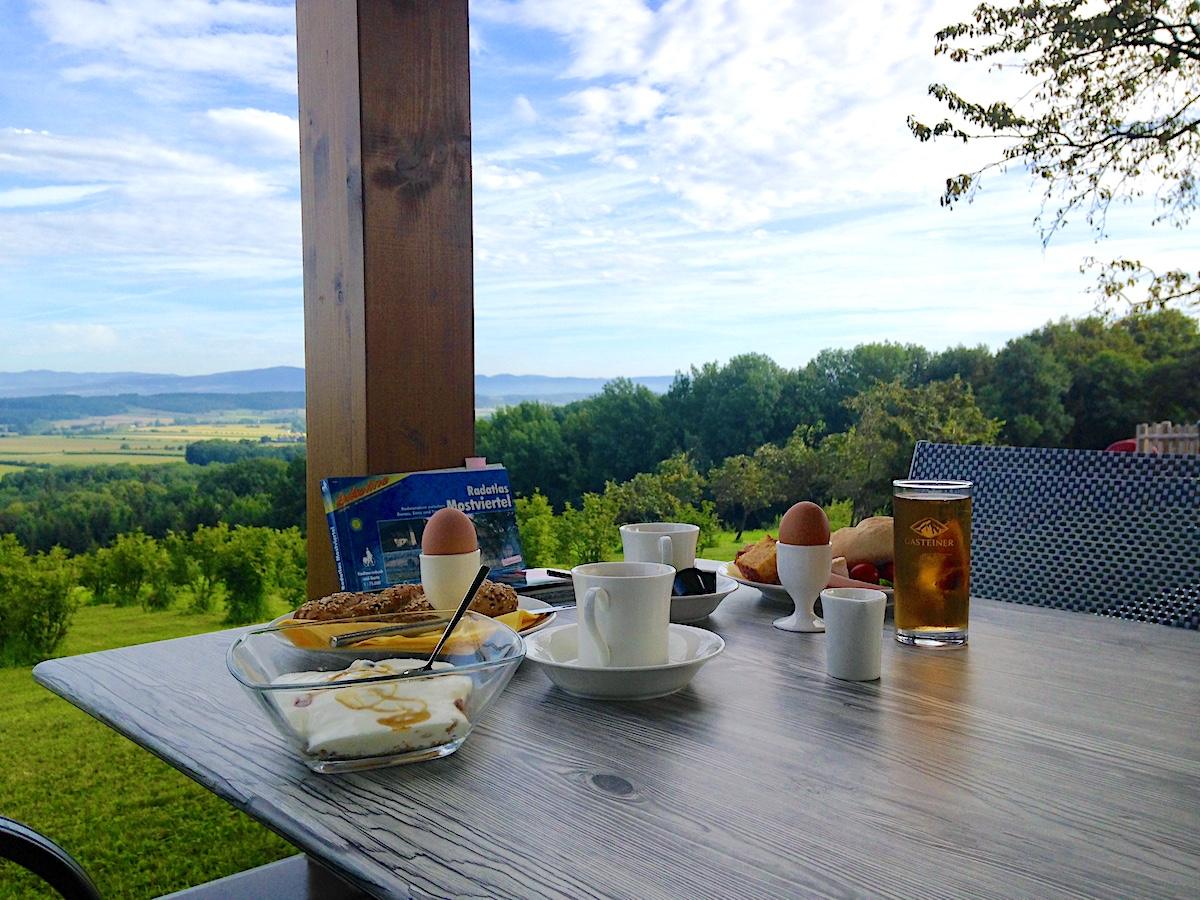
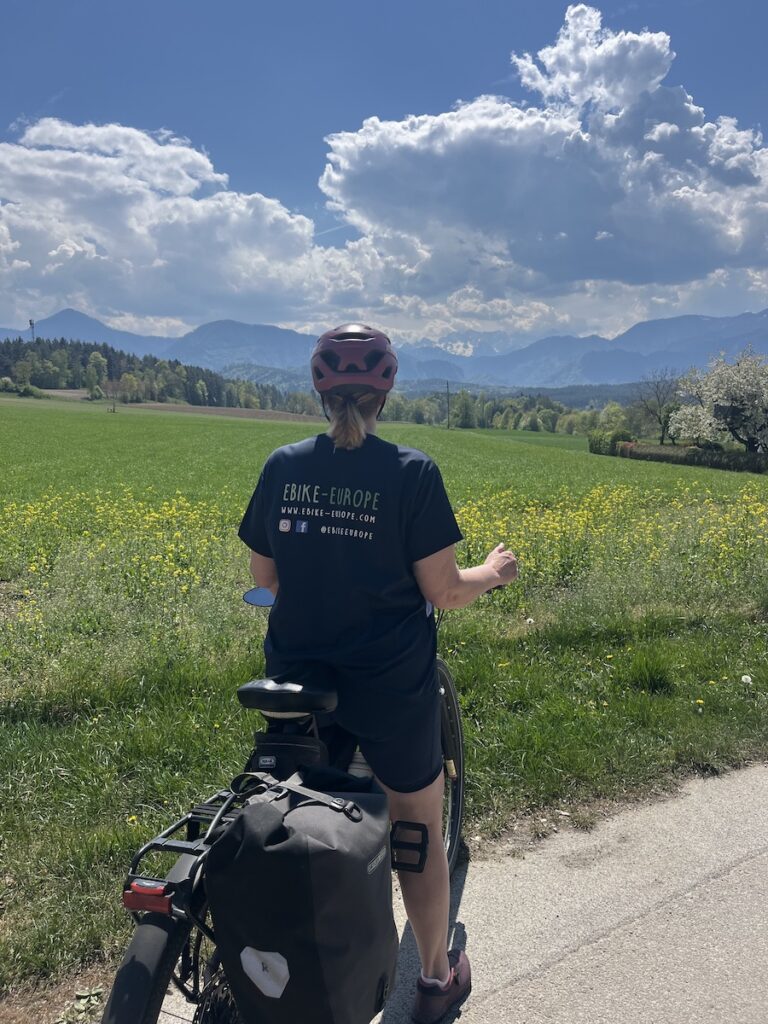
We also managed another cycling weekend in the Mostviertel region of Lower Austria.
Although the route was supposed to be fairly gentle, there were still some challenging climbs.
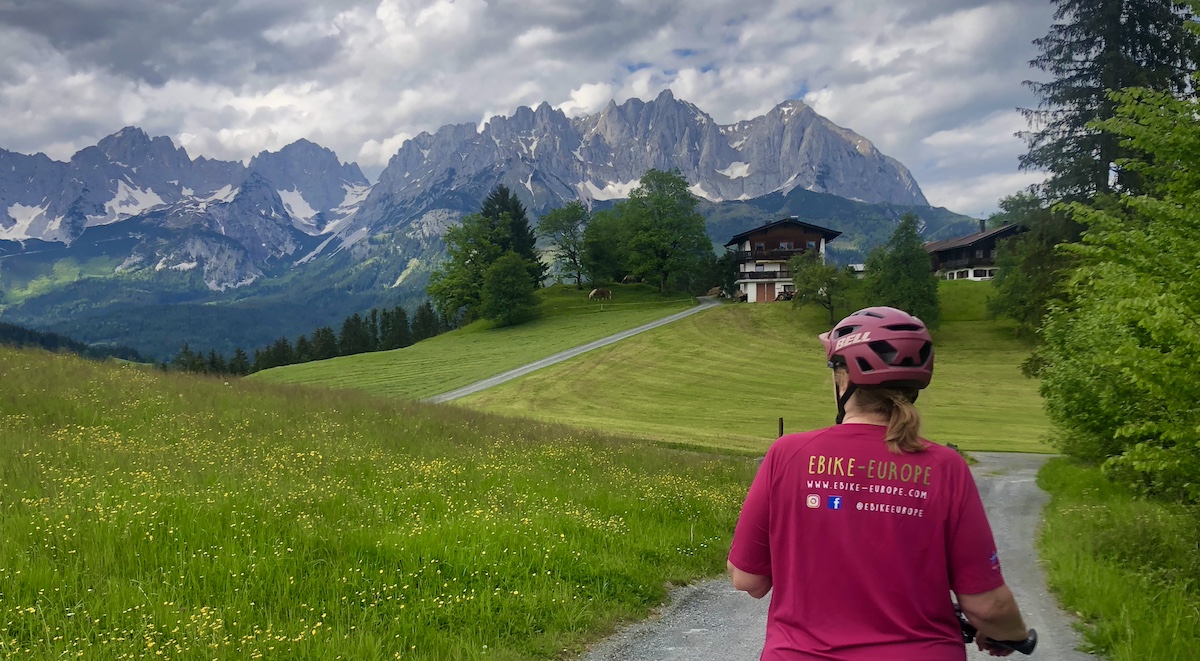
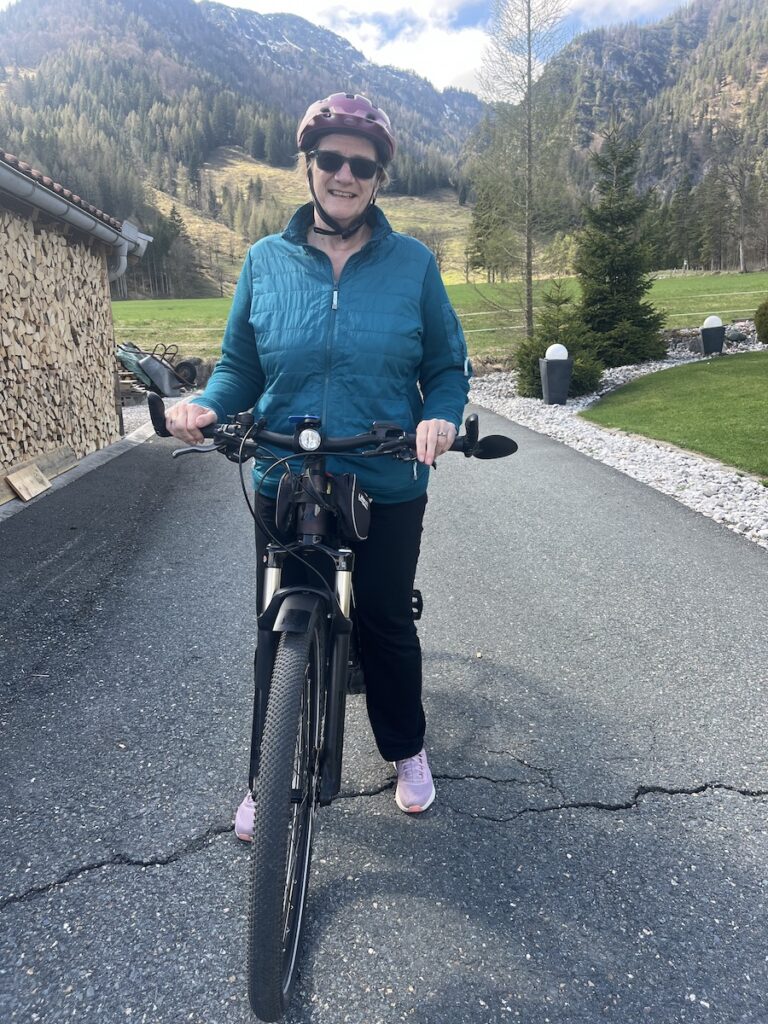
This is where my e-bike became my superhero.
Without the assistance, I wouldn’t have managed some of those hills. With it, I could enjoy the views, explore new places and regain confidence in what my body could do.
More importantly, it reminded me that life after surgery wasn’t about limitations.
It was about possibilities.
Looking Back
Recovery from knee replacement surgery is not a straight line.
There are good days and difficult days.
There are moments when progress feels frustratingly slow and moments when you suddenly realise how far you’ve come.
For me, the biggest lesson was patience.
The exercises matter.
The physiotherapy matters.
The walking matters.
But time matters too.
Today, when I look back at those first painful days after surgery, I’m grateful I went through it.
Because every walk, every bike ride and every adventure since then has been built on the progress made during those early weeks.
And that’s something worth celebrating.
Would I Have Done It Sooner?
One thing people said to me repeatedly before my operation was, “You’ll wish you’d done it sooner.”
Looking back, I’m not sure I agree.
For me, the timing was right. At 59, I’m probably on the younger side for a knee replacement, but I’m determined to stay active as I move into my 60s. I still want to cycle, travel, ski, and enjoy all the activities that make life fun.
The years leading up to surgery weren’t always easy, but they helped me appreciate just how much my knee was holding me back. By the time the operation came around, I was mentally ready and fully committed to doing everything I could to ensure a successful recovery.
I wasn’t just aiming to get rid of the pain. I wanted to regain a level of fitness and mobility that I hadn’t enjoyed for several years.
That’s why, when the opportunity to attend a residential rehabilitation programme came up, I grabbed it with both hands. It felt like the perfect next step in my recovery and a chance to give both my new knee and my recovering shoulder the best possible start.
I’ll share more about that experience in my next blog.